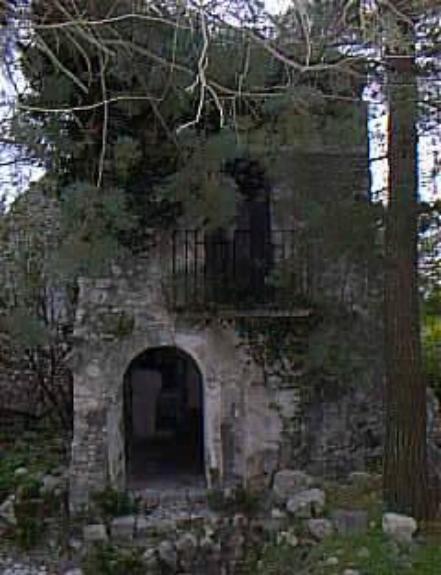
| This is one of the many houses that still remains in San Pietro. Most of the city was destroyed during the fighting in December 1943. After World War Two, the people of San Pietro moved further down the Liri Valley, abandoning the old town of San Pietro. Today, the old city of San Pietro is quiet. Because the city was not rebuilt after the War, many of the homes still contain artifacts from the attack due to having never been rebuilt. |
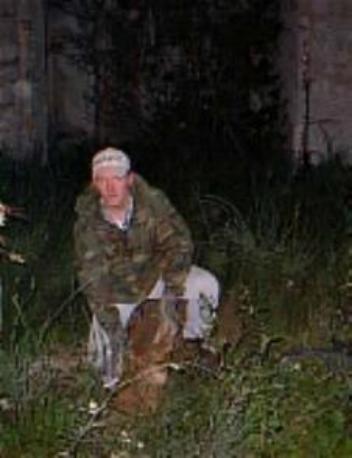
| The photo, above left, shows QuestMasters conducting archeology work in the "Old Church" of Chiesa di S. Michele Arcangelo. This church was destroyed in December 1943. The church was partially rebuilt in the late 1940's after the War, but was abandoned with the rest of the city when the new city of San Pietro was built. The right photo is a U.S. 8" M106 200lb. Howitzer HE (High Explosive) projectile that was recovered by QuestMasters from Chiesa di S. Michele Arcangelo (The "Old Church" of San Pietro). This projectile was responsible for destroying the southern wing of the Church in December 1943. Recovery of this projectile can be seen in the left photo. The U.S. 5th Army's 8" M-1 Howitzer had a effective range of 12 miles. |

| San Pietro Infine, Italy |
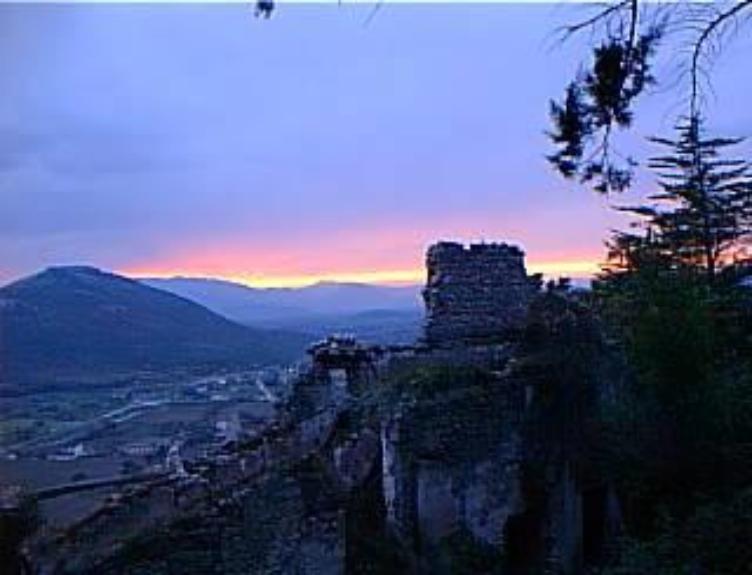
| In 1997 through 1999, QuestMasters conducted vast archaeological work in the town of San Pietro Infine, Italy. This town lies 10 miles south of Monte Cassino, at the beginning of the Liri Valley. Early in December of 1943 San Pietro was caught in the advance of the U.S. 5th Army heading toward Monte Cassino. San Pietro held a strategic role in the advance of the Liri Valley, being flanked on the west by Monte Lungo and by Monte Sumucro to the east. This town was finally liberated by the U.S. 36th "Texas" Infantry Division on December 20th 1943 after several unyielding weeks of battle. Today, San Pietro is known as the "Pompeii" of World War Two. |
 |
| |
 |
| |
 |
| |
 |
| |
 |
| |
 |
| |
 |
| |
 |
| |
 |
| |
 |
| |
 |
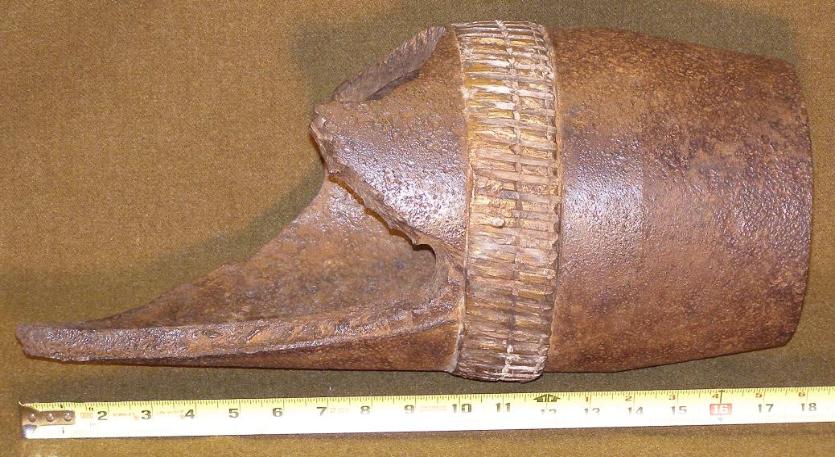
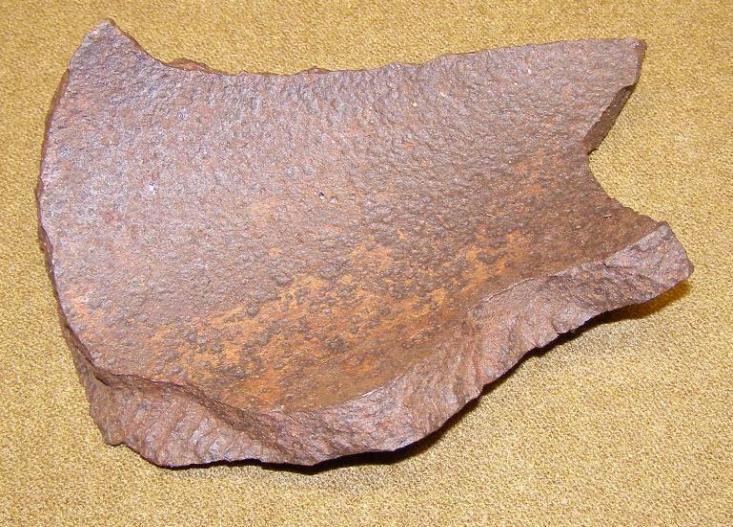
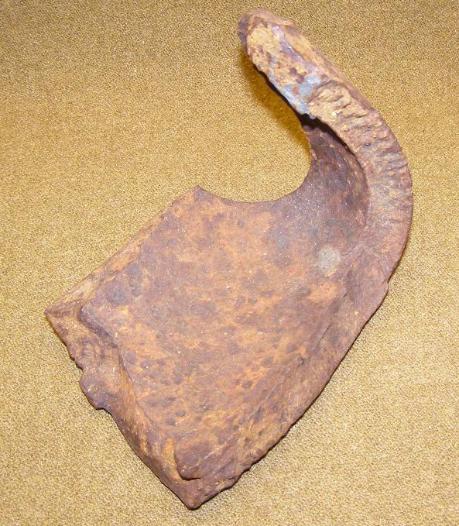
| U.S. 8" M106 200lb. Howitzer HE (High Explosive) Shrapnel, above two photos. These two pieces additional pieces of U.S. 8" M106 200lb. Howitzer HE (High Explosive) projectile that were recovered by QuestMasters from Chiesa di S. Michele Arcangelo (The "Old Church" of San Pietro). |

| 105mm HE Shrapnel, left photo. This shrapnel fragment was also found in the town of San Pietro. When this shell fragmented, it split lengthwise down the center. This shows the high explosive cavity inside of the shell. This shell does not have a base detonating fuze. |
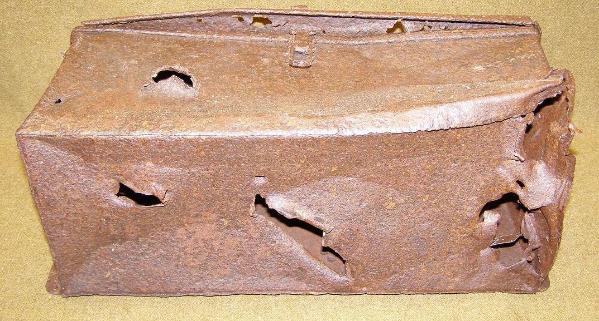
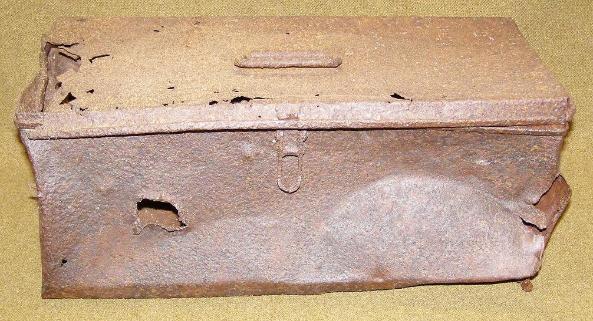
| German Kraftsänge 39 1000mm Schnittlänge (Stihl) Zubehör, above left and right photo. This storage box is for the German Kraftsänge 39 1000mm Schnittlänge (Stihl) Zubehör or - accessory box for the 1000mm cutting length, Model 39 Chainsaw produced by Stihl, during WWII for the German Wehrmacht. It was found in the town of San Pietro. This box has violent shrapnel or bullet holes that have penetrated through all four sides and the bottom. It was used by the German 15th Panzer Grenadier Division or German 71st Infanterie Division that occupied the city of San Pietro, Italy. |
| THE BATTLE OF SAN PIETRO |
| The Battle of San Pietro Infine was a major engagement from December 8th to 17th 1943, in the Italian Campaign of World War II, involving Allied forces attacking from the south against heavily fortified positions of the German "Winter Line". The Germans had occupied San Pietro in September 1943 to prepare the defenses. They evacuated all non-essential Italians from the town. They set up a defensive perimeter in the whole territory, in particular on Mount Sammucro and Mount Lungo, which overlooked the Mignano Gap. These were strategically important positions because they allowed the control of the long stretch of Route 6, important for the advance of the Allies toward Rome. The Fifth Army began to attack the Reinhard/Bernhardt Line on 5 November, and the attacks continued into December. The Battle of San Pietro was preceded by Allied attacks on the Camino Hill Mass at the entrance to the Mignano Gap (named for the small town on the road at that point). The entire hill mass is about 6.2 miles long and 3.7 miles wide. After that, the main Allied effort was against the German defenses on Mount Sammucro and Mount Lungo, which dominated the narrow valley on the northeast and southwest respectively. As a point of historical interest, the assault on Mount Lungo was aided for the first time by the 1st Italian Motorized Group, part of the recently reconstituted Italian army, now fighting on the side of the Allies. The direct attack on the German positions in and around San Pietro began on December 8th by Major General Geoffrey Keyes', II Corps of the Fifth Army. The positions were defended by two battalion sized elements of the German 15th Panzer Grenadier Division and a battalion of the German 71st Infanterie Division, all part of German Tenth Army's XIV Panzer Corps. After a week of intense attacks and counterattacks, the U.S. 36th Division's 143rd Infantry Regiment, the 3rd Ranger Battalion and the 504th Parachute Regimental Combat Team (504th PRCT) commanded the heights of the Sammucro Mass. The U.S. 36th Division, then planned a further effort for December 15th. The 143rd Infantry, assisted by the 504th PRCT, would continue to push west along the shoulders of Sammucro and take San Vittore del Lazio while to the south of Route 6 the 142nd Infantry, supported by the Italian 1st Motorized Group, were to capture Mount Lungo. In the center, the 141st Infantry would attack San Pietro itself. The main attack of the 36th Division started at 12:00 on December 15th. In an effort to break the German defenses in the town, two platoons from the 753rd Tank Battalion attacked with 16 M-4 Sherman Tank's and Tank Destroyers. The armored attack failed due to mines and anti-tank fire. Four of the 16 tanks survived. After four successive Allied attacks and German counterattacks, the Germans pulled back from San Pietro since the dominating ground on both flanks, Mount Lungo and the Sammucro peaks, was now in II Corps' possession. The Germans launched a counterattack on December 16th to cover their withdrawal as they retreated to positions farther north at Cedro Hill, Mount Porchia, San Vittore, and the western spurs of Mount Sammucro. |
| QUESTMASTERS ARCHEOLOGY WORK: |
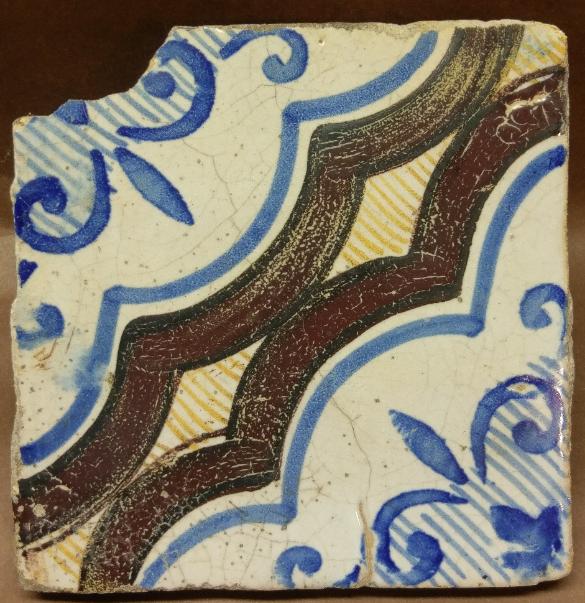
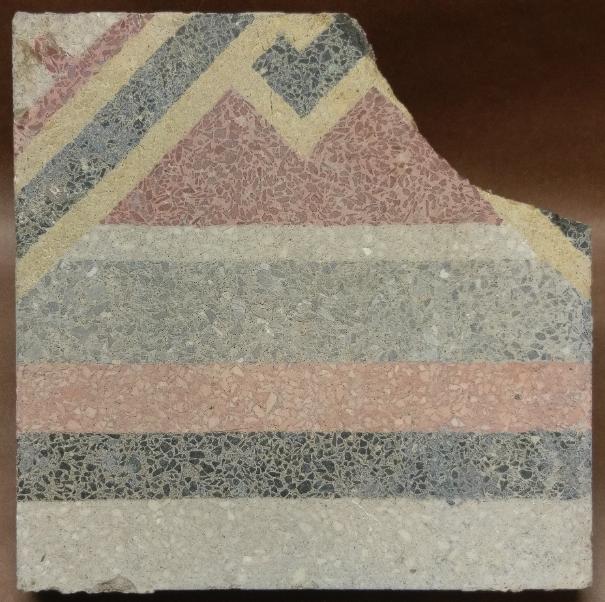
| Ceramic Floor Tile, above two photos. These two pieces were recovered from the floor of the destroyed Chiesa di S. Michele Arcangelo (The "Old Church" of San Pietro). The rear of the glazed tile, right photo, is marked with the maker (unreadable) and Roma (Rome). |
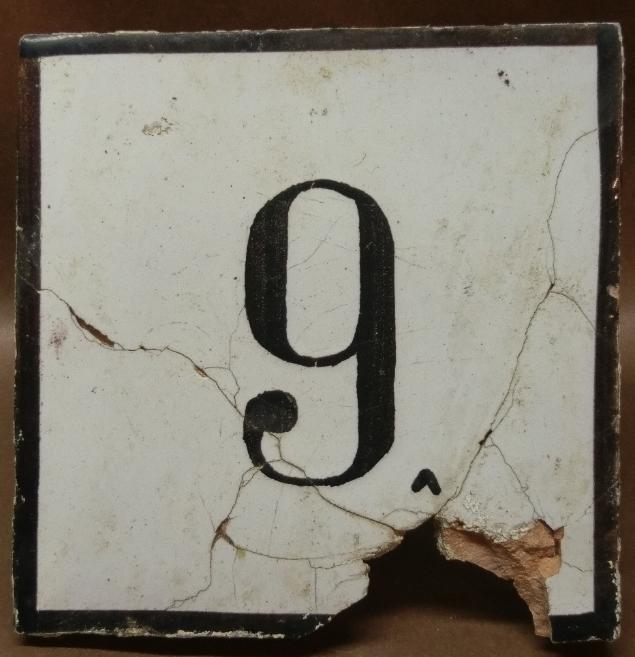
| House Address Marker, above photo. This glazed tile was recovered from one of the destroyed houses in San Pietro, Italy, by QuestMasters. The Number of the house was Nine. It has been glued back together from broken pieces that were recovered from the rubble. |
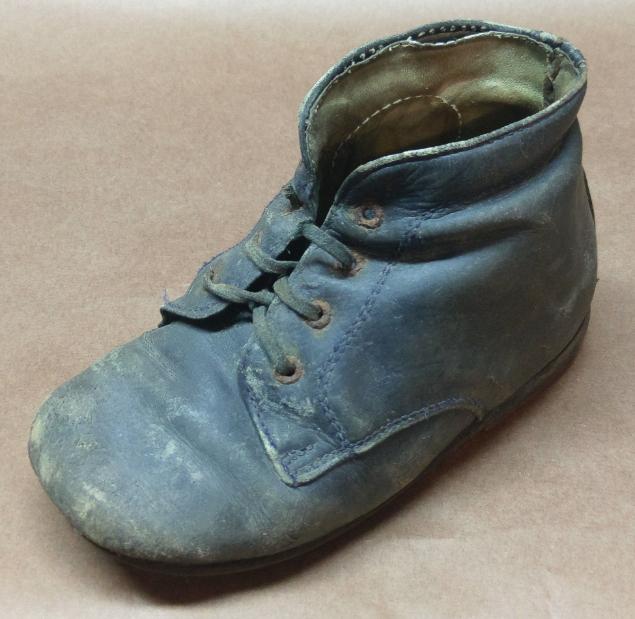
| Child's Shoe, above photo. This wartime Child's left shoe was recovered from the underground rubble in the Town of San Pietro, Italy while conducting archeology work. Only one shoe was found in the rubble. Based on the size of the shoe, the child was only a year or two old. |
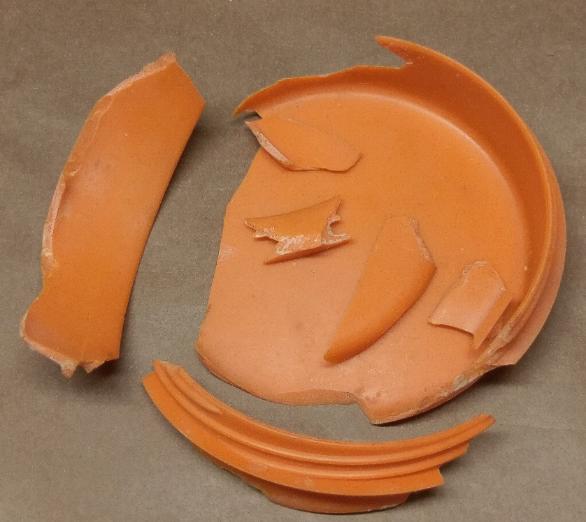
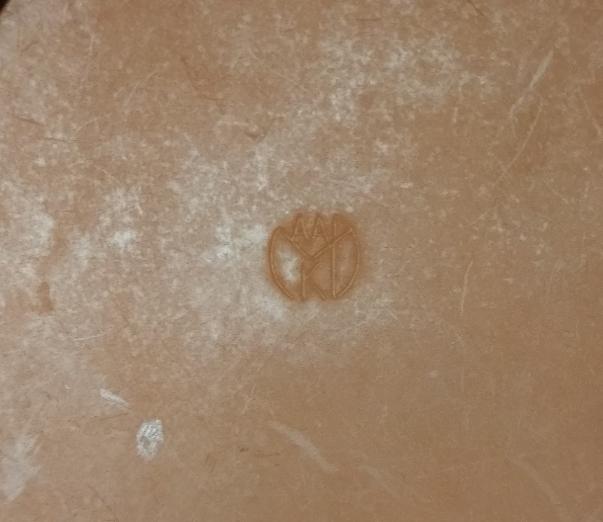
| German Wehrmacht Butter Container, above two photos. This German Wehrmacht (Armed Forces) Butter Container was found while conducting archeology work in San Pietro. These containers were made of bakelite, the predecessor to plastic, and were made in various colors from white to black/brown. This example is orange in color with the wartime German makers mark, right photo, on the bottom of the container. It is missing the screw top lid. This type of container was issued to every member of the Wehrmacht. It was meant to hold the Soldiers daily ration of butter, jam or fat to be used during meals. This would have belonged to a German Soldier assigned to the German 15th Panzer Grenadier Division or the German 71st Infanterie Division assigned to the defense of San Pietro, Italy |
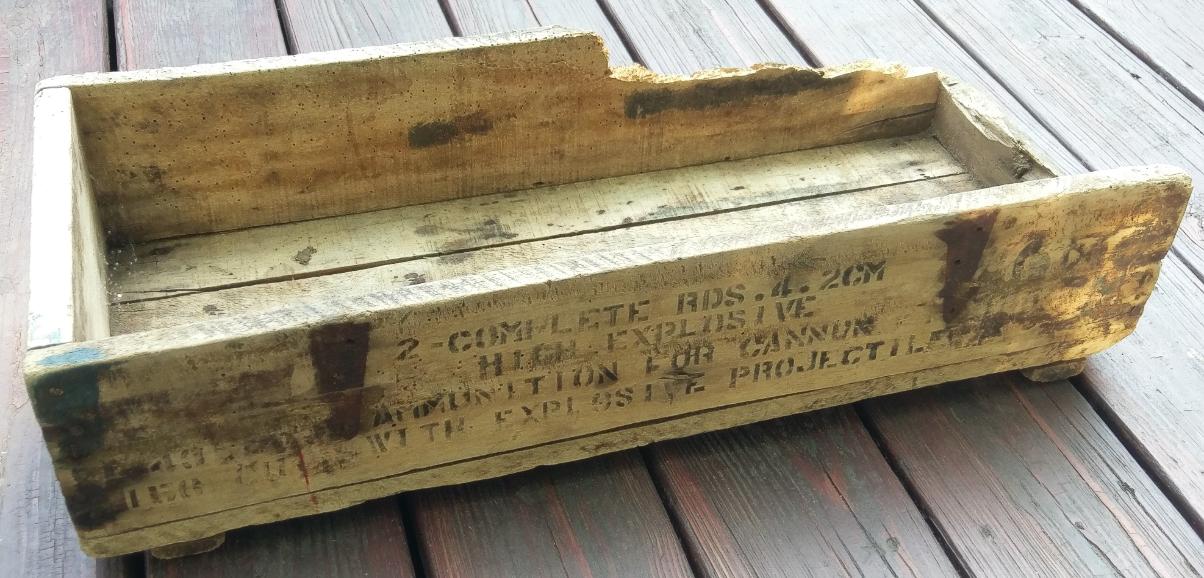
| U.S. 4.2 Inch Chemical Mortar Crate, above photo. This U.S. 4.2 Inch Mortar Crate was found while conducting archeology work in San Pietro, Italy. The crate is stenciled in black paint over bare wood: 2 - COMPLETE RDS. 4.2CM (Chemical Mortar), HIGH EXPLOSIVE, AMMUNITION FOR CANNON, WITH EXPLOSIVE PROJECTILE. The crate is dated March 1943 and would have been used during the battle in December 1944. Barely visible are the blue corner markings denoting Chemical Warfare Service (CWS) overseas shipping markings. The bottom of the crate is marked 1804-CWS-DEPOT. |
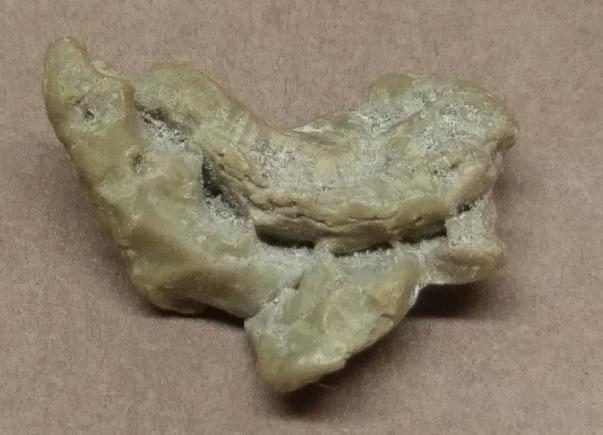
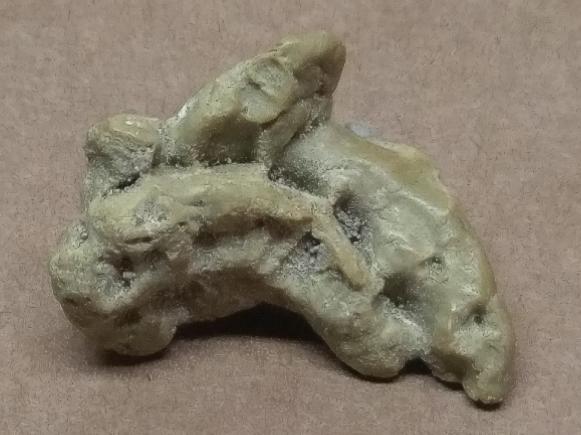
| Chewed Gum, above two photos. One of the most unusual, fragile and precious items ever found by QuestMasters during archeology work is this chewed piece of gum. While conducting archeology work in the town of San Pietro, Italy, everything unearthed is examined. The normal battlefield debris are expected while digging 12" or more down in the soil, shell casings, projectiles, insignia - even human remains. Every small clump is examined. But this small "clump" that came up with all of the shell casings and debris was different. Once cleaned, its story became evident. It was a piece of chewed bubble gum, but this size is what made it very special, the teeth marks indicated that the gum was chewed by a small child and then discarded with all of the other remains of war. |
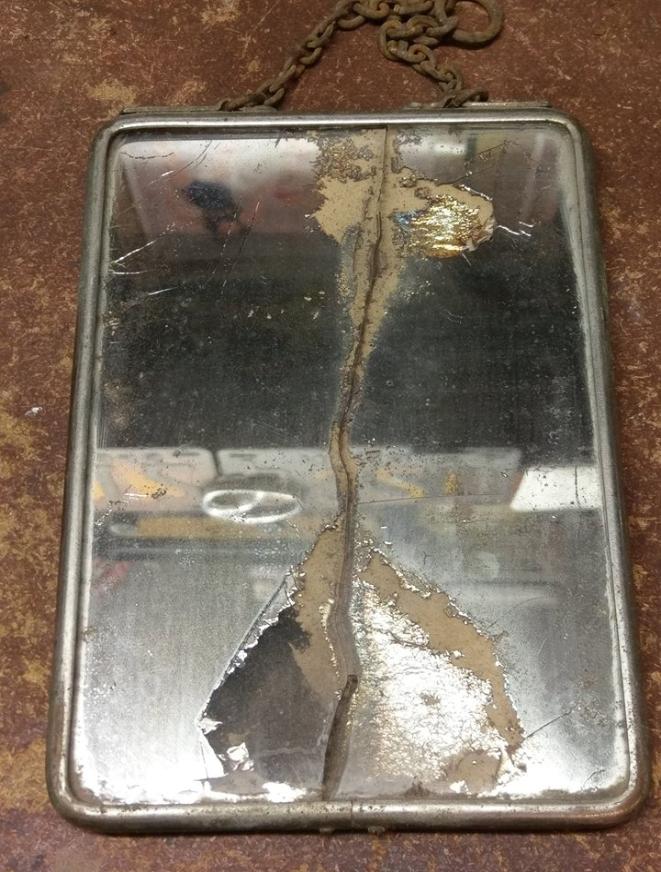
| Silver Glass Mirror, above photo. This fragile silvered-glass mirror with cardboard backing was recovered by QuestMasters in 1997 from a building in the town of San Pietro, Italy. Although cracked, this mirror has seen the reflection of both war and peace. |
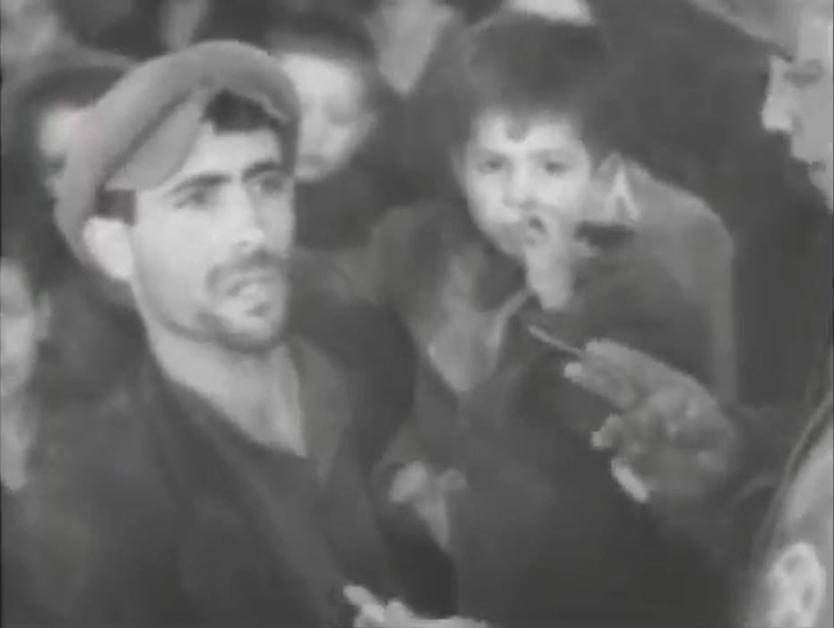
| The documentary "The Battle of San Pietro", above photo. This photo is a single frame from the "The Battle of San Pietro", a documentary film directed by John Huston in 1943. In this single frame a U.S. Soldier is handing an Italian child a piece of chewing gum in the town of San Pietro, Italy. It is quite possible that the gum shown above photo is the same gum in this wartime footage. The "Battle of San Pietro" is a documentary film directed by John Huston about the Battle of San Pietro Infine sixty miles from Naples during World War II. It was shot by Jules Buck. It was released in the U.S. in 1945 but shown to U.S. troops earlier. Huston and his crew - which included the British novelist and screenwriter Eric Ambler - were attached to the U.S. Army’s 143rd Regiment of the 36th Division. Unlike many other military documentaries, it was claimed Huston’s cameramen filmed alongside the infantrymen as they fought their way up the hills to reach San Pietro. In fact, the film was completely recreated after the battle using real Soldiers, recreating the battle that had just been fought. Although the film was made after the actual battle, it documents actual 36th Infantry Division Soldiers and Italian civilians in San Pietro, Italy, in December 1943. The Shoulder Sleeve Insignia (SSI) of the Soldier handing the gum to the child appears to be the patch of the U.S. 6th Corps. |
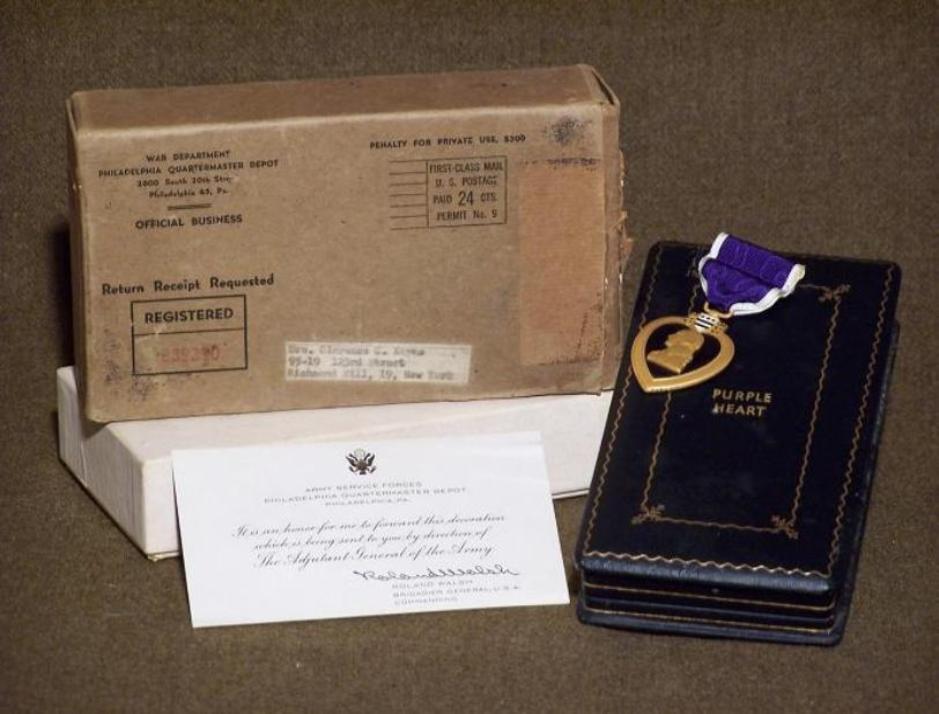
| Next-of-Kin Purple Heart Medal, above photo. This Purple Heart Medal, in the QuestMasters Museum collection, was awarded to the Next-of-Kin of PFC Clarence Charles Keyes 32238345, 36th Infantry Division, 142nd Infantry Regiment, B Company, Killed In Action - December 7th 1943, near San Pietro Italy. To read his story, click here: http://www.questmasters.us/36th_Infantry_Division_Clarence_Keyes.html |
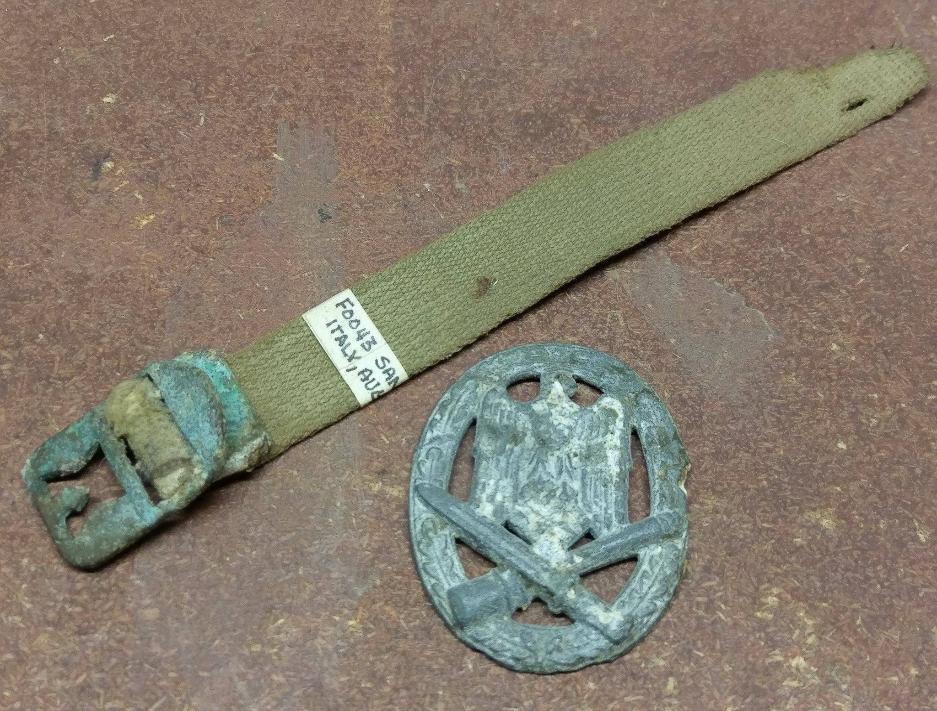
| U.S. M-1 Helmet Chin Strap and German General Assault Badge, above photo. Shown here are two items excavated by QuestMasters, in 1997, from the town of San Pietro, Italy. The American WWII M-1 Helmet brass bar buckle with chin strap (produced between 1941 and 1942) and a German WWII General Assault Badge, which was awarded to non-infantry members for taking part in 3 different assaults. This badge belonged to a German soldier of the 15th Panzer Grenadier Division. This would not have belonged to a German Soldier from the German 71st Infanterie Division, as they would have been awarded the German Infantry Assault Badge. |
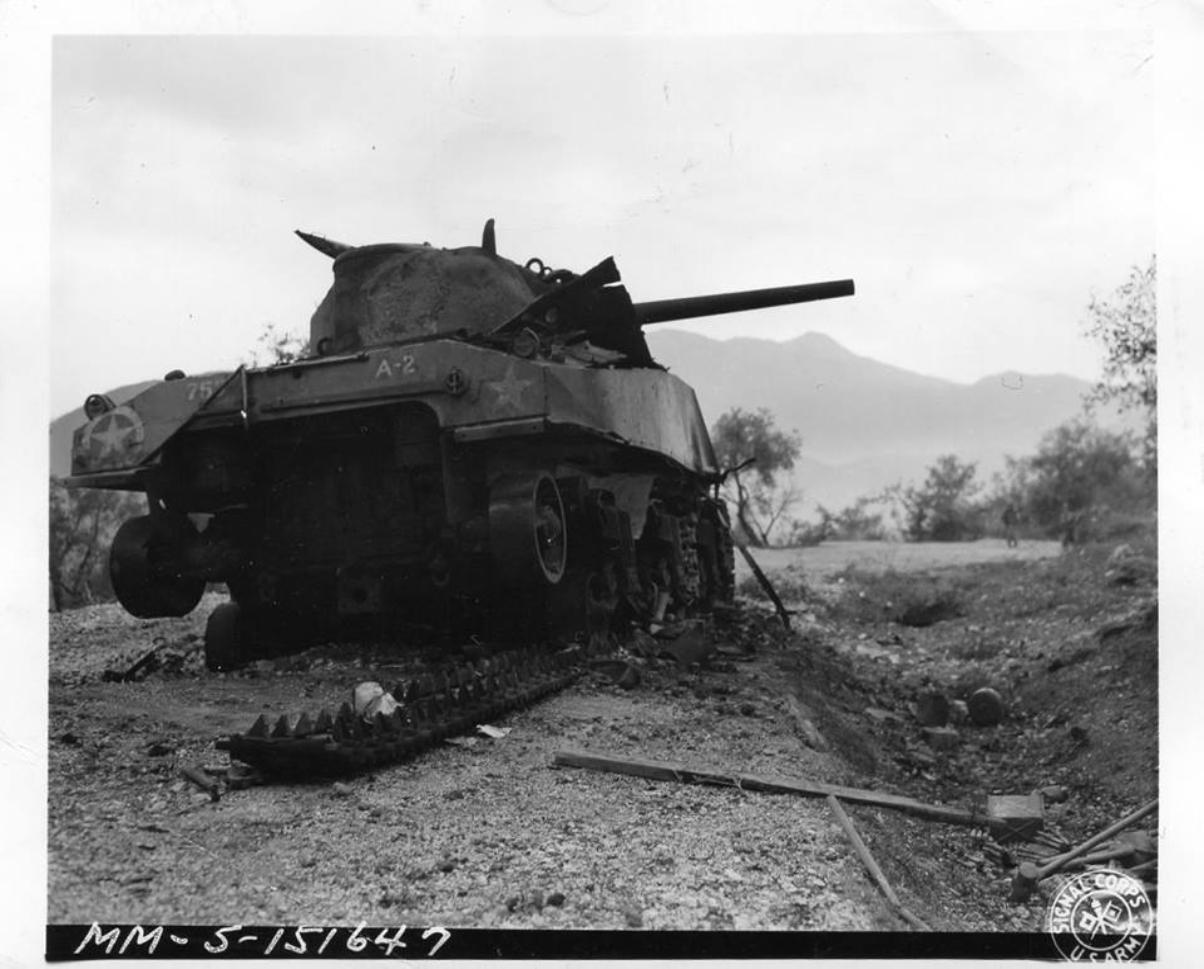
| Signal Corps photo, San Pietro, Italy December 1943, above photo. This photo, found by QuestMasters at the National Archives, College Park MD, shows a U.S. M-4 Sherman tank from the 753rd Tank Battalion, A Company, Tank A-2, that has been knocked out by a German Teller Mine, San Pietro Italy, photo taken December 18th 1943. Both sets of tracks from the tank have been broken. The photo was taken by the 163rd Signal Company. |
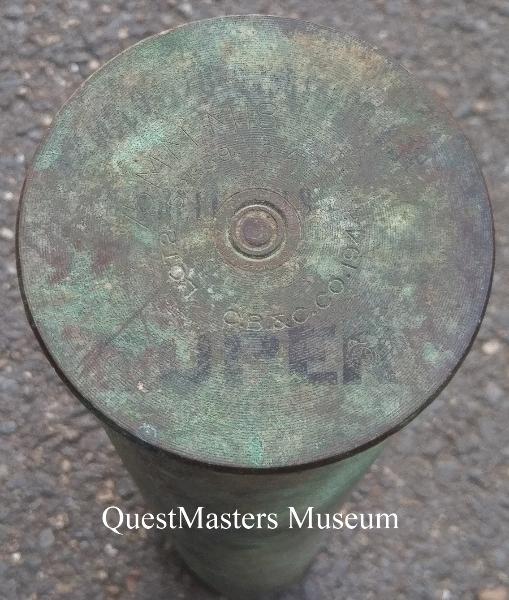
| 75mm Gun Shell Casing, above photo. This shell casing was ground recovered by QuestMasters a few miles from San Pietro in the town of Monte Cassino. The shell casing is a 75mm M48 High Explosive round that is stenciled SUPER and used in the U.S. M-4 Sherman tank. The shell casing has been fired. The casing is stamped: 75MM M18 LOT 2 52639-24 C.B.&C.CO. 1942 |